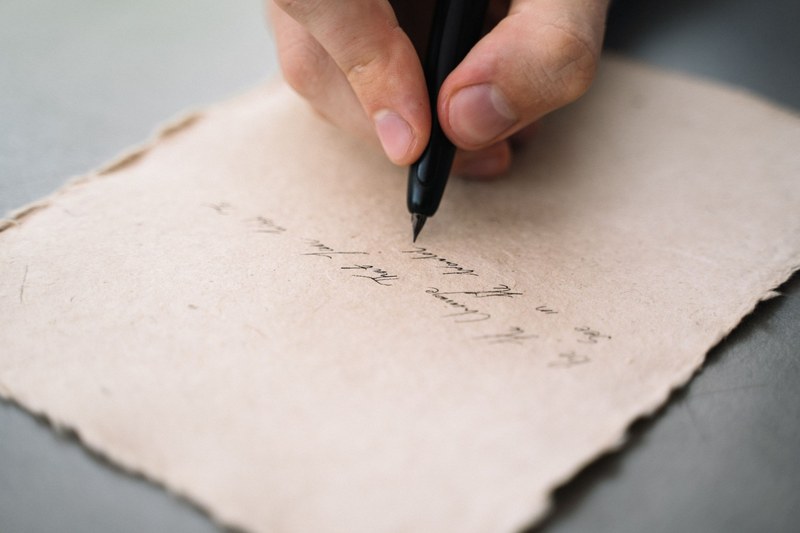
Yes. North Carolina is one of the states that still recognizes holographic wills, meaning wills written out by hand with no witnesses. Under N.C.G.S. § 31-3.4, a handwritten will is valid if it is written entirely in your own handwriting and signed by you, or has your name written in or on it in your own hand. No attesting witness is required when you sign it.
The difficulty comes later. A holographic will is easy to create and hard to prove. Getting one admitted to probate takes three people willing to swear to your handwriting, and that is where many of these documents fall apart.
As of 2026, the statute sets only two requirements:
That is the full list. No witnesses, no notary, no particular form of words. You also have to be at least 18 and of sound mind, which applies to every will in North Carolina.
No, and this is the single most common piece of outdated information about North Carolina wills.
For decades, state law required a holographic will to be found after death among the testator’s valuable papers or effects, in a safe-deposit box or other safe place, or with a person entrusted to hold it. A handwritten will discovered in a kitchen drawer could fail on that basis alone.
The General Assembly repealed that requirement in Session Law 2021-85, effective July 8, 2021. Where the document turns up no longer affects its validity.
One detail still matters: the repeal applies to estates of people who died on or after July 8, 2021. If you are settling the estate of someone who died before that date, the old location requirement still governs their will, and one witness has to testify about where it was found. Many articles and older guides still state the repealed rule as though it were current law, so check the date of death before relying on anything you read.
This is where handwritten wills get expensive. Under N.C.G.S. § 28A-2A-9, a holographic will may be probated only on the testimony of at least three competent witnesses who believe both the document and the name on it are in the handwriting of the person whose will it claims to be.
Three people. Each one has to know your handwriting well enough to swear to it under oath, and each one has to still be living, locatable, and willing to come forward when the time comes.
Compare that to a typed will signed with two witnesses and made self-proved with a notarized affidavit under N.C.G.S. § 31-11.6. That document can go to the Clerk of Superior Court with no witness testimony at all. The family files it and the clerk accepts it.
The handwritten version saves an hour today and can cost your family months of delay later.
Most rejected holographic wills fall into a familiar pattern:
Typed wills are valid, but only when properly executed. A will prepared on a computer has to be signed by you and witnessed by two competent witnesses who sign in your presence. There is no exception for a document that clearly states your wishes but was never witnessed, because North Carolina has no harmless-error rule to rescue a defective will.
Digital wills are not recognized. A will typed into a phone, saved as a file, written in an email, or recorded as a video does not qualify as a holographic will, because none of it is in your handwriting.
Oral wills exist in a very narrow form. North Carolina allows a nuncupative will only in last-illness or imminent-peril circumstances, it reaches personal property only, and it requires two competent witnesses who were asked to bear witness. It is not a planning tool.
If you want a document that covers real estate, retirement accounts, guardianship for minor children, and a named executor, a properly drafted last will and testament is the only reliable route.
Does a handwritten will need to be notarized in North Carolina?
No. A holographic will needs no notary and no witnesses at signing. Probate still requires three witnesses to the handwriting.
Can I handwrite changes onto my existing typed will?
No. Handwritten edits to an executed will generally have no effect. Make changes through a codicil or a new will.
Is a handwritten will still valid if it was in a dresser drawer?
Yes, for anyone who died on or after July 8, 2021. The old requirement that it be found among valuable papers was repealed that year.
What happens if my handwritten will is rejected?
Your estate is treated as if you left no will and passes under North Carolina’s intestacy rules, which follow a fixed formula rather than your wishes.
Does a handwritten will cover my house?
It can, if the language is clear enough to identify the property and the beneficiary. Vague descriptions are a frequent source of disputes over real estate.
If this article hits close to home, a handwritten page in a drawer is better than nothing, but it asks your family to prove something at the worst possible moment. Johnson Legal can review what you have written, tell you whether it would survive probate, and prepare a document that does not depend on finding three witnesses. Reach out to talk it through with a Wilmington estate planning attorney.
This article is for general information only and is not legal advice. Whether a particular document qualifies as a valid will depends on its exact contents and the date of death. For advice about your situation, speak with a licensed North Carolina attorney.

Shane T. Johnson is the CEO and Managing Partner of Johnson Legal, an estate planning and business law firm in Wilmington, NC. With years of experience in estate and business law, he has zealously represented clients in various legal matters, including small business formation and purchasing, estate planning, probate, domestic violence, and other legal cases.
Shane received his Juris Doctor from the University of Wyoming and is a member of the North Carolina Bar Association. He has received numerous accolades for his work, including being named among the Best Probate Lawyers in Wilmington by Expertise.com.